


The Iceberg and the Sailor
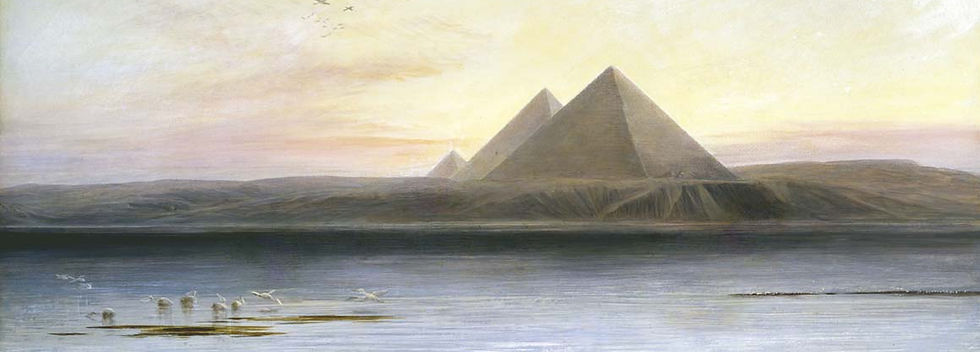
Imagine the nervous system of your body, including both your brain and mind, as an ancient pyramid, made of bricks of ice, swept into an ocean, floating, like an iceberg. Think of this ocean as the substance which joins your brain/body/mind/spirit/soul to the universe. Indeed, the ice, the ocean, and its waves comprise the universe.
The seam between the iceberg and the ocean is both the boundary and the medium through which Qi (chi), life-force, God, or Christ-Light comes in contact with us and keeps us afloat. The names are merely symbols; the actual substance remains the same regardless of the name.
A person cultivating attention through mindfulness is like a sailor in a boat tethered to the iceberg. As the iceberg drifts in the Ocean’s currents, the sailor follows. If they wish, the sailor can subtly influence the iceberg’s direction. If they lack patient attentiveness, however, they are merely the iceberg, unmoored.
As a sailor sitting in your boat, the tip of the iceberg is visible. The capstone represents your conscious control. In this small space, the voluntary aspects of your Being occur, such as decision-making, executive function, or free will. As one example, you cannot choose if you fall into unconscious sleep, or when to naturally awake, but you can decide if an alarm will be necessary to get out of bed, to brush your teeth, shower, dress, eat breakfast, make a plan, choose an activity to begin, transition to the next one, and take time to rest. These events, called decisions, take place in the visible space above the ocean’s surface.
In the shallow waters just beneath the surface, the sailor can view their conscious awareness. You cannot control what arises in the thinking-feeling space of your mind. You only notice it. The information appearing in the shallows is derived from the ocean of the universe beyond your skin, eyes, ears, nose, and tongue; and is then sensed within the pyramid of your body, especially your belly, heart, and head. When the activity arising within conscious awareness is too intensely thought or felt, one can hardly control if or how it is expressed. But generally speaking, most of the time, the visible capstone of conscious control decides how to interpret and express the thoughts and feelings arising from within the shallows of conscious awareness. Those interpretations greatly influence what arises later in conscious awareness, but more about those practices is written below.
In the depths beneath the shallows, the vast base of the pyramid-shaped iceberg is completely invisible, involuntary, and uncontrollable. These include the functions of bodily growth and maintaining homeostasis. These functions are carried out by the life-force which permeates your Being, in conjunction with your genes, which have been encoded and edited since the origin of the universe—long before there were symbols or names for genes, oceans, icebergs, or waves.
All of the above only sets up the crux of the story: how can a sailor alter the course of such an unwieldy system? Although none of us can control a pyramid adrift of this size and age, we can influence its conditions—the direction it travels, if you will. The most invasive, severe, and expeditious method—the last resort—of altering the conditions of the iceberg are made by divers, called surgical teams. They have specialized skills and tools to open caves and enter the iceberg to physically alter its functionality.
Human beings have also developed a slightly less severe, over-the-counter, under-the-table method of altering the iceberg’s functionality. A sailors’ conscious control can voluntarily choose to administer chemical substances which effect change in the shallows and depths of the iceberg. Some examples include caffeine, sugar, alcohol, marijuana, and pharmaceuticals, but also very healthy food. Natural changes in biochemistry can be induced through activities like exercise, loving touch, and gazing upon a mountain range or a sunset, but also gambling, video games, pornography, or high-risk novelties like bungee jumping.
Other than physical and chemical alterations, there is only one other method by which we change the direction of the iceberg. This is the least invasive, slowest, most primitive method. We call it empathetic, curious listening combined with repetitive practice. That is to say, an open-minded willingness to alter one’s mind through learning and the implementation of new habits—mental as well as behavioral. Like all changes in habits, you must persist in the practice while you’re failing in order to become successful.
Imagine, if you will, a dolphin one day approaches the sailor to demonstrate how it moves so elegantly through the water. The sailor pays attention. Later, a piece of driftwood drifts by which is shaped like a dolphin’s fin. The sailor takes hold of the small end, dips the broad end in the water, and uses it to paddle. The sailor learns to move ahead, and to slow down, even to reverse course. More time is needed to refine the practice that paddling on the right steers the boat left and paddling on the left steers right. The sailor can well imagine the future possibilities and does not give up. Eventually steering becomes habitual, like riding a bike.
Aimless icebergs untethered to a sailor lack this flexibility: to imagine, to persist, and learn. Humans once referred to similar states as freedom, self-control, and power. Icebergs without a sailor are feeling and acting out the impulses and beliefs coursing up from the subconscious mass minute by minute, hour by hour. They are unwilling, or unable, to consider and decide which feelings and actions to present with their conscious control. We may all be riding a bike to the best of our ability, but unmoored icebergs are less able to steer, brake, close the gaps, and avoid collisions.
If an iceberg lacks the conscious control to voluntarily decide to change—whether physical, chemical, or habitual—nothing can intentionally alter the iceberg’s course. Only three tools in the universe remain: the iceberg may put in the extra work to mitigate the consequences of collisions or distance after the fact; sailors may work to absorb the blows or accept the distance; both may hope that the window of tolerance between them, called patience, is wide enough to allow relationships to endure.
Let me leave you with a trick that makes all of the tools described above more effective. Ancient sailors learned this from the whales. Modern physicists call it non-locality. As mentioned above, a sailor can observe what is happening below the shallows of their own iceberg within conscious awareness. They can then choose how to present that information to other sailors. What they present mysteriously moves through the ocean in waves and generates experiences within the shallows of another iceberg’s conscious awareness. The sailor tethered to that iceberg can then observe the thoughts and feelings arising within them and choose how to respond to the signals generated by the other sailor. It’s as if they are communicating.
If sailors become adept at non-locality, they can learn to cooperate and collaborate to steer their icebergs in such a way that they can pull up close to others and stay warm for years to come—a distinct advantage for human beings trying to live in a cold universe. Trust me, it is worth the effort to practice and learn.